
Tired Of UNO? Here Are 3 Family-Friendly Card Games To Play Instead!
Timmy, It's time to upgrade!


While we can all agree that UNO is a classic game that paved the way for other games in the hobby, it’s time to highlight some contemporary card games that have risen in popularity due to their uniqueness and enjoyment factor.
The Mind
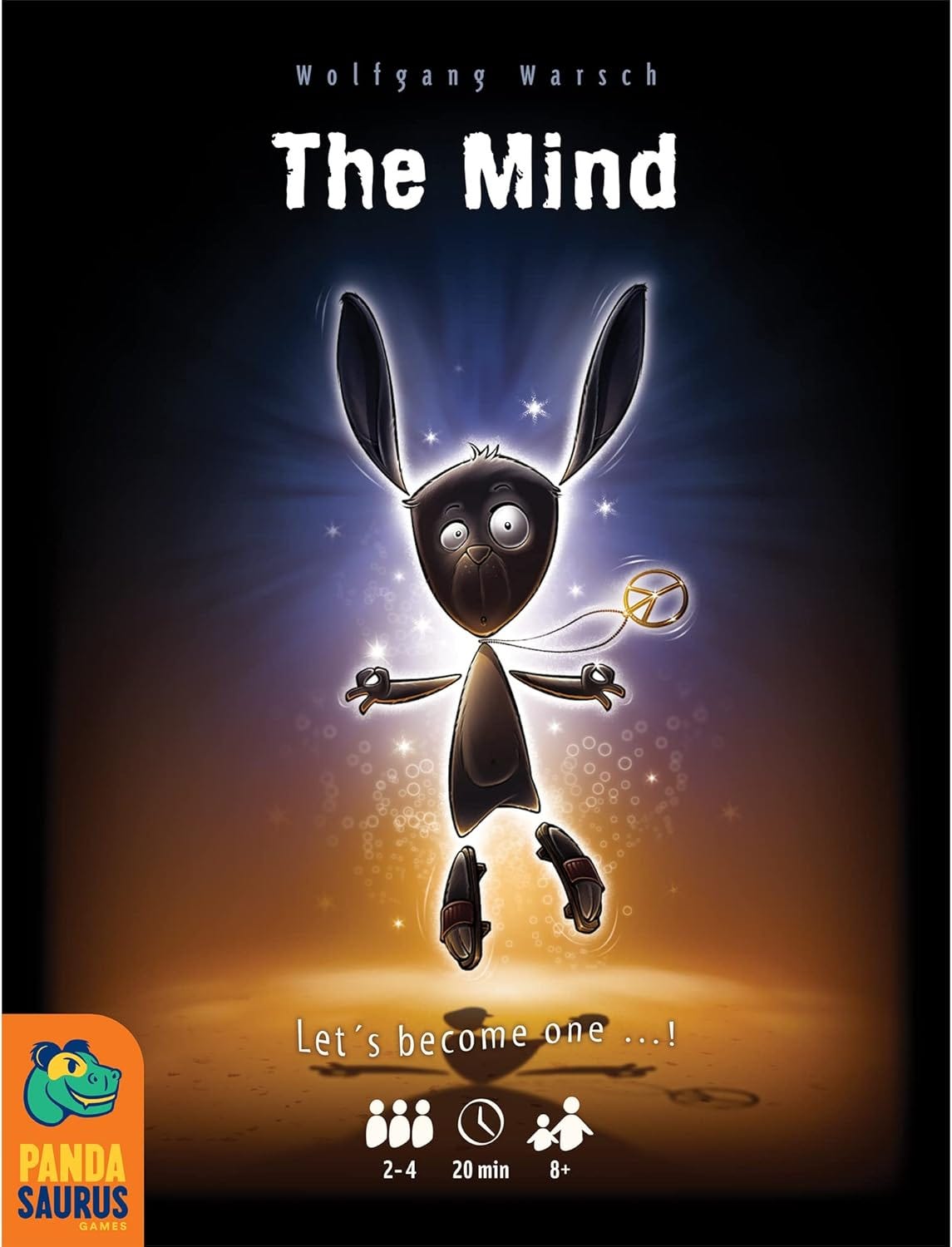
With over 3 million copies sold worldwide, The Mind is a no-brainer for those looking for a light, family-weight game that is both fun and unique from other games.
Complexity Level: Novice
Demographic: Casual Gamers
Player Count: 2 to 4 players.
Best Player Count: Best with 4 players.
Overview
The Mind is a silent cooperative card game in which four players work as a team, playing cards to complete a certain number of stages. The twist is that players cannot make gestures or talk!
Setup
Depending on the stage, players draw cards from a deck of 100 cards, numbered from 1 to 100. In stage one, players draw one card; in stage two, two cards, etc.
The group also starts with a certain number of life cards and ninja stars at their disposal. Remember this is a cooperative game. So life cards and ninja stars belong to the entire group.
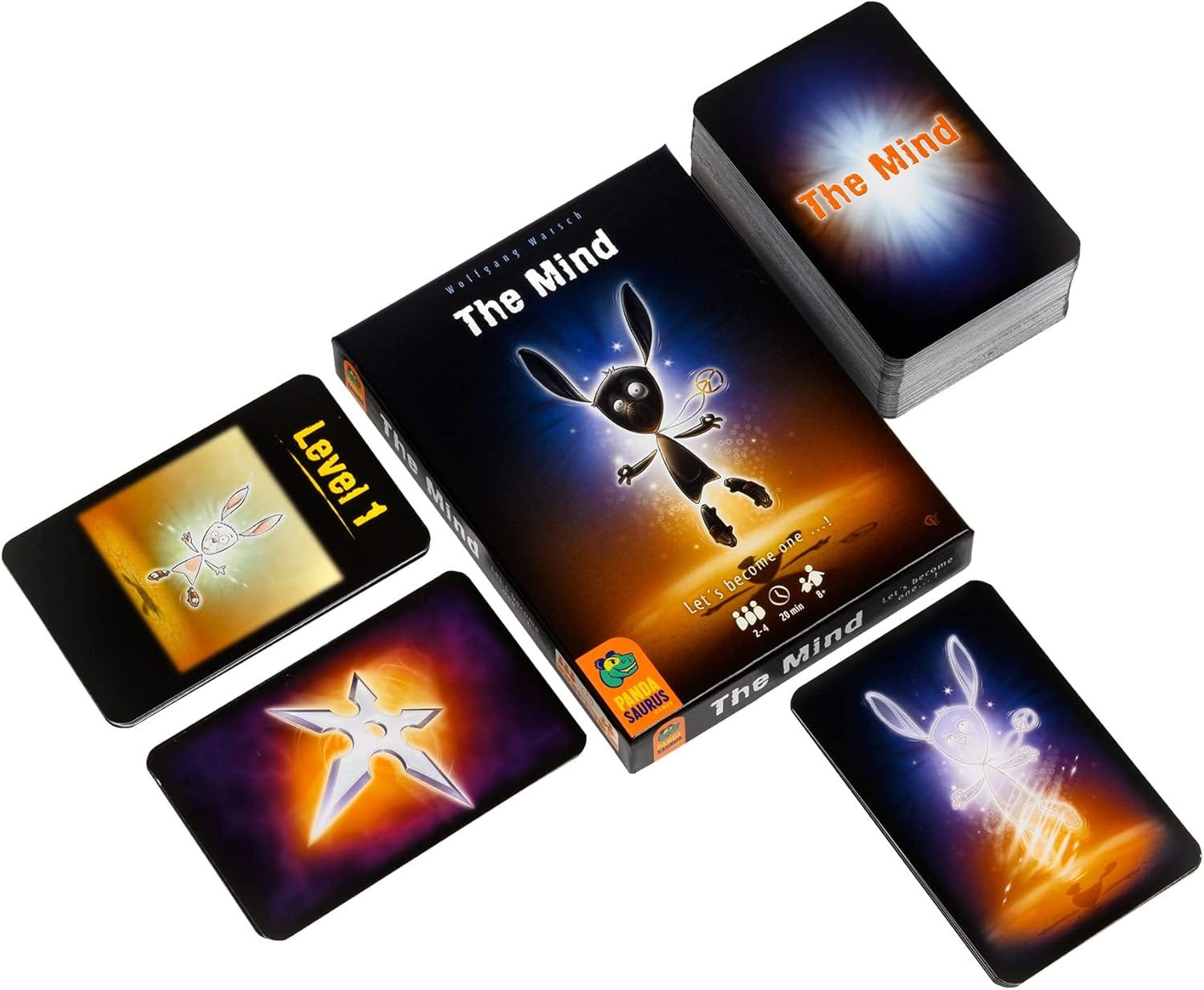
Once players have drawn their cards, the first round, or stage 1, starts!
Goal
Players are trying to play all the cards from their hand in rising numerical order, without skipping any numbers.
Example: In round one of a four-player game. All four players draw ONE card (because it’s stage one) and must play that card in the center of the table in any order they wish and at any time they want. If a player feels they should go first, then they can do it!
Cards are played in order and on top of each other, forming a stack that will grow as more cards are played onto it
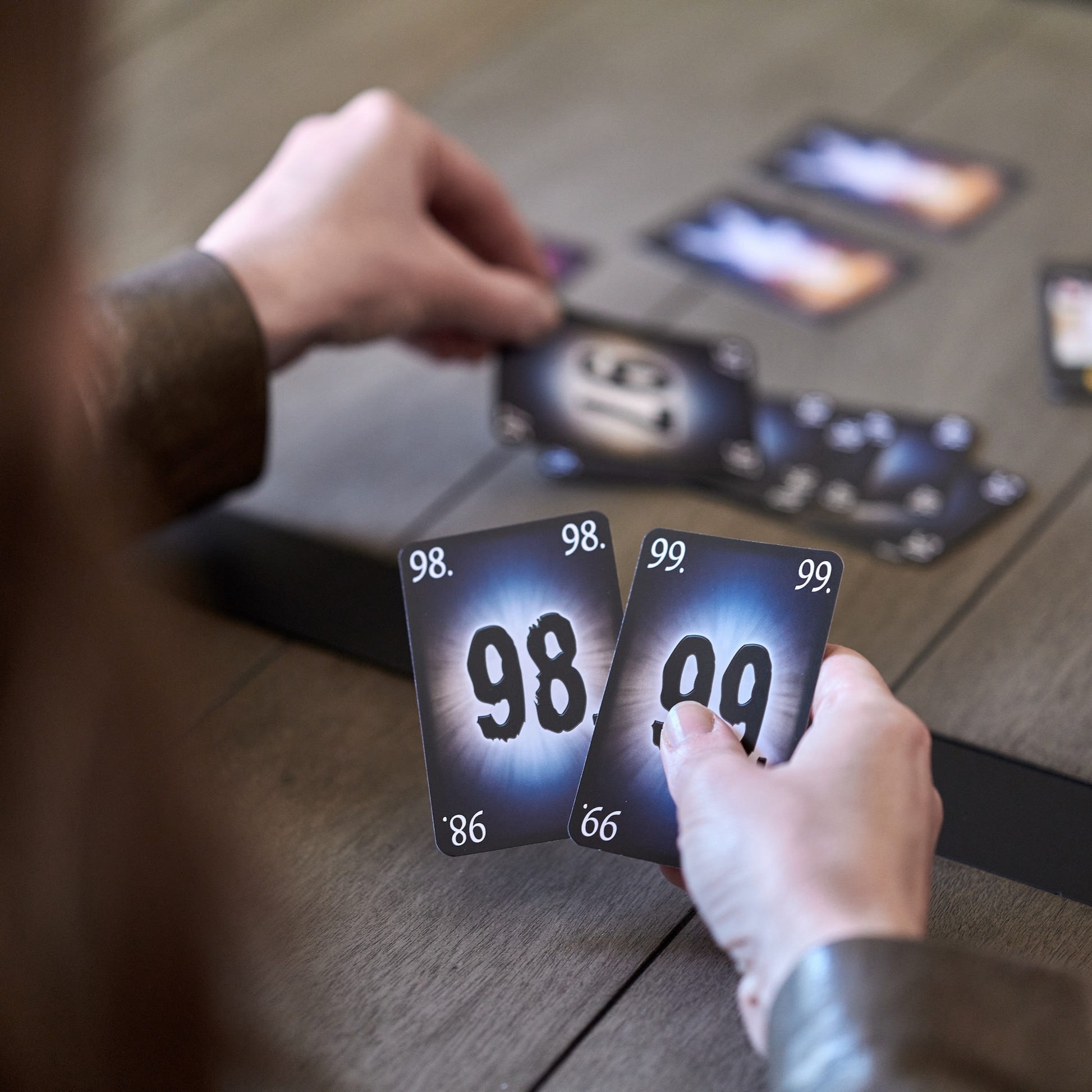
If players play all of their cards in rising sequential order (12, 22, 54, 68), then they advance to the next round! If for some reason a player plays a card that breaks the rising sequence of numbers, they must lose a life card!
Example: John plays the number 22 card before Andrew has a chance to play his number 12 card. Since Andrew knows he was skipped in the sequence, he discards a life card in silence as a penalty and removes his 12 card from play. Players continue until all players play their cards. If players play their cards in the correct sequence, they advance to the next stage.
Note: Players can lose several life cards in a round.
Round or Stage End
Once players have played all their cards in sequence and in rising order, they advance to the next stage. As players advance through stages, they will gain rewards (lives and ninja stars) for beating certain stages. They will also draw more cards in each subsequent stage, increasing the difficulty level of the game.
Example: In stage 5, each player draws five cards! That means that in a 4-player game, players need to collectively play out their 20 cards in rising order. Yikes! Of course, if players make mistakes, they can discard life cards. Just remember that life cards are limited and can only be used once per incorrect card played. Players can also play ninja stars to remove cards from their hands.
Win Condition
To win, players must pass the final stage.
2 Players: Levels 1-12
3 Players: Levels 1-10
4 Players: Levels 1-8
Loss Condition
If at any point the group loses its last life card, it loses the game and must start over from stage one.
What I Like
It takes a few plays to understand the game, but once you and your group are in sync, it will make sense. For a greater challenge once you beat the game, try the secret mode that’s even harder!
Pros
A social-kind-of game that is difficult to describe and can only be understood once played.
Players must unify their minds in silence, using their guts and instincts to play well.
Rewards repeated plays with the same group.
Cons
Can become repetitive if overplayed for a long period of time. It’s best to take it out once in a while with new groups or entry-level gamers.
Flip 7
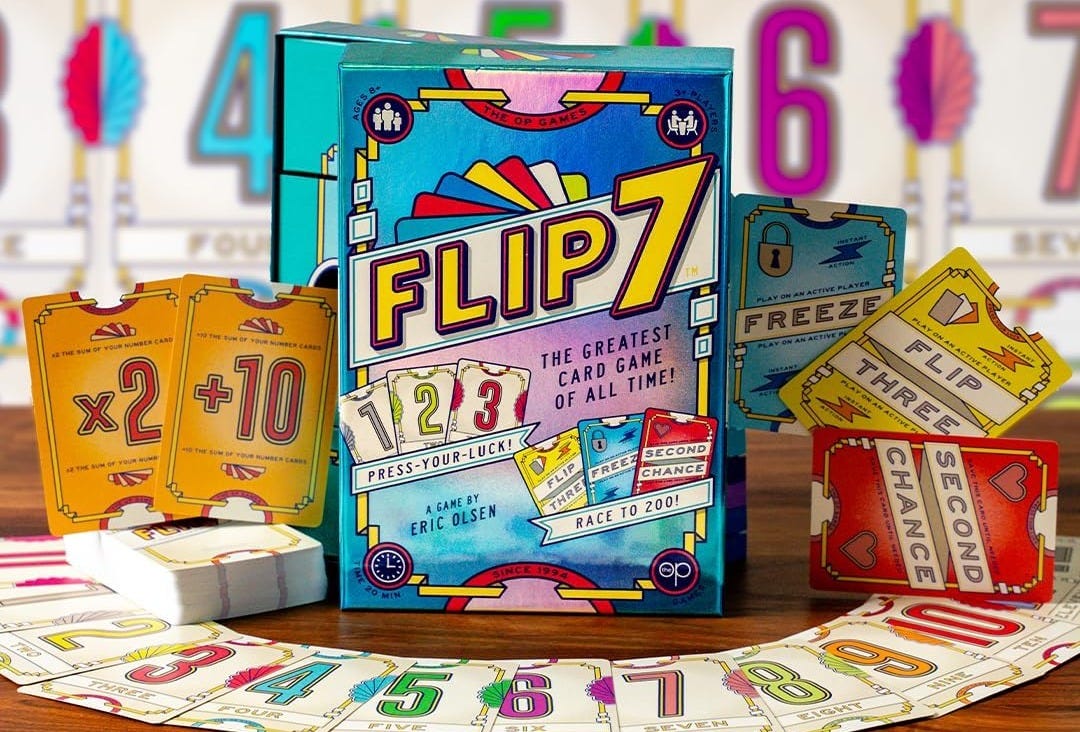
One of the major hits of 2024, Flip 7 has continued to topple charts and rise its way up the Board Game Geek family rankings!
Complexity Level: Novice
Demographics: Casual Gamers
Player Count: 3–18 Players
Best Player Count: Best at 4 or 5
Game Overview
Flip 7 is a fast-paced, blackjack-like push-your-luck card game in which players will play over several rounds, trying to win by being the first player to reach 200 points.
Turn Overview
On your turn, you must choose one of the following options:
“Hit” to draw a card from the dealer.
“Stay” to exit the round and bank your points.


The majority of the cards you will be collecting are number cards. These number cards range from 0 to 12. There are twelve number 12 cards, eleven number 11 cards, ten number 10 cards, and so on.
Number cards give you points equal to their value. For example, a number 10 card gives you ten points, and a number 7 card gets you seven points. But here’s the catch: if you ever draw two number cards of the same type, you “bust” and lose all your cards (points). When drawing cards, you always risk busting by drawing a copy of a card you already have, hence the “push-your-luck.”
I don’t get it. Where’s the game?
Flip 7 is a game of card counting, probabilities, and risk management. Let’s look at some scenarios:
If you start the round with the 12 card in front of you while everyone else has other numbers, your odds of drawing a 12 card are much higher because there are eleven more 12 cards in the deck. Should you risk it and draw, or should you play it safe and stay?
If you have a number 3 card in your points area and two other players have the two remaining number 3 cards, you know for certain that you can’t draw another 3 card!
Remember, there are twelve number 12 cards, eleven number 11 cards, ten number 10 cards, etc. So you’ll need to count cards at the table to calculate your odds.
Why Flip 7?
At any point in the game, if you collect seven unique number cards without busting, you get the Flip 7 reward: gain 15 extra points and end the round immediately. I should note that the Flip 7 is very satisfying to do, since it’s really difficult to pull off.
Card Types
There are two other kinds of cards in Flip 7:
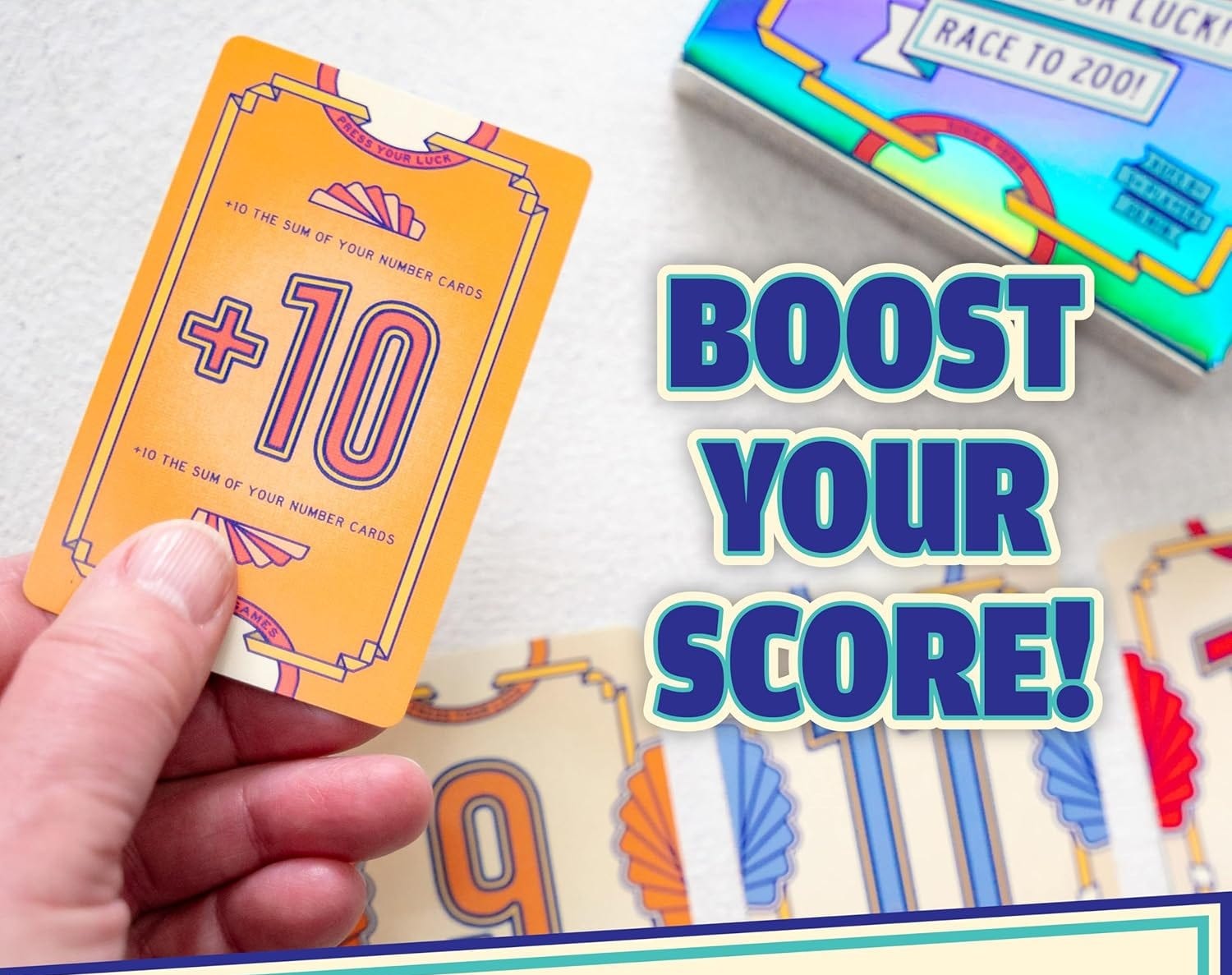
Modifier Cards
These cards are orange and add bonus points. They have no copies and, as such, cannot make you bust.
Action Cards
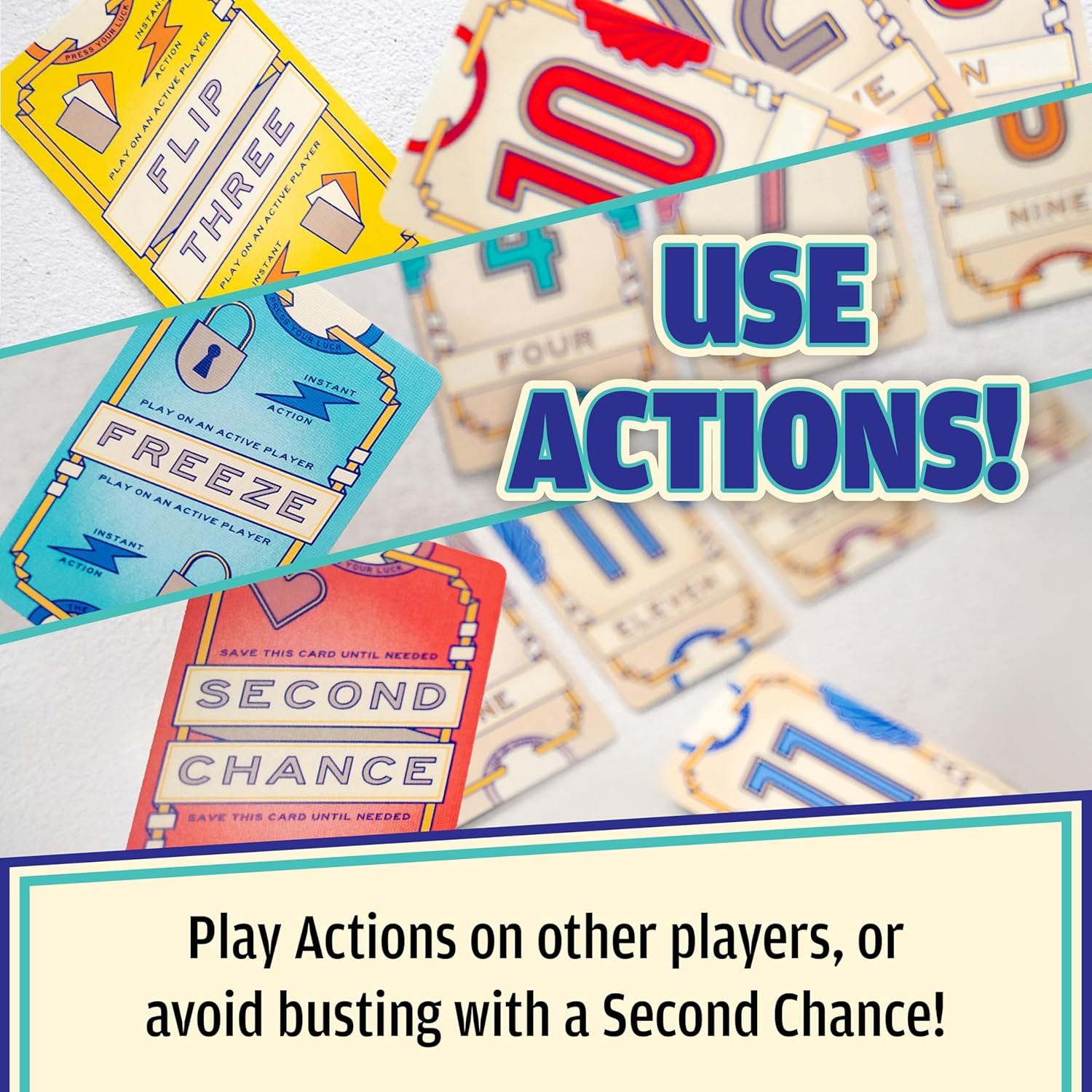
There are three action cards:
Second Chance: Second chance cards can be discarded to protect you whenever you bust.
Freeze: Freeze cards can be given to another player to essentially take them out of the round. However, they still keep their points.
Flip Three: You can keep it or give it to another player, forcing them to draw three cards from the deck, which is very effective if they have high numbers.
Game End
Once a player crosses the 200 point threshold, the game ends at the end of that round. The player with the most points wins.
What I like
What’s cool about Flip 7 is the push-your-luck, blackjack-feel it has because it forces you to play instinctively. It’s also worth noting that, although players draw cards at random, they can mitigate the unpredictability by counting the cards on the table. Usually, if you bust, it’s because you pushed your luck a little too hard when the odds were stacked against you.
Pros
An affordable card game with beautiful presentation and card artwork.
It is simple to learn and highly thrilling.
Great for larger groups of players.
Cons
It can be a bit long sometimes depending on how the game unfolds. I personally prefer to play to 100 or 150 points.
Cockroach Poker
Complexity Level: Novice
Demographics: Casual Gamers
Player Count: 2 to 6 players.
Best Player Count: Best with 5 players.
Game Overview
Cockroach Poker is a bluffing, party-style card game with simple rules that are perfect for players of all ages and skill levels.
Game Setup
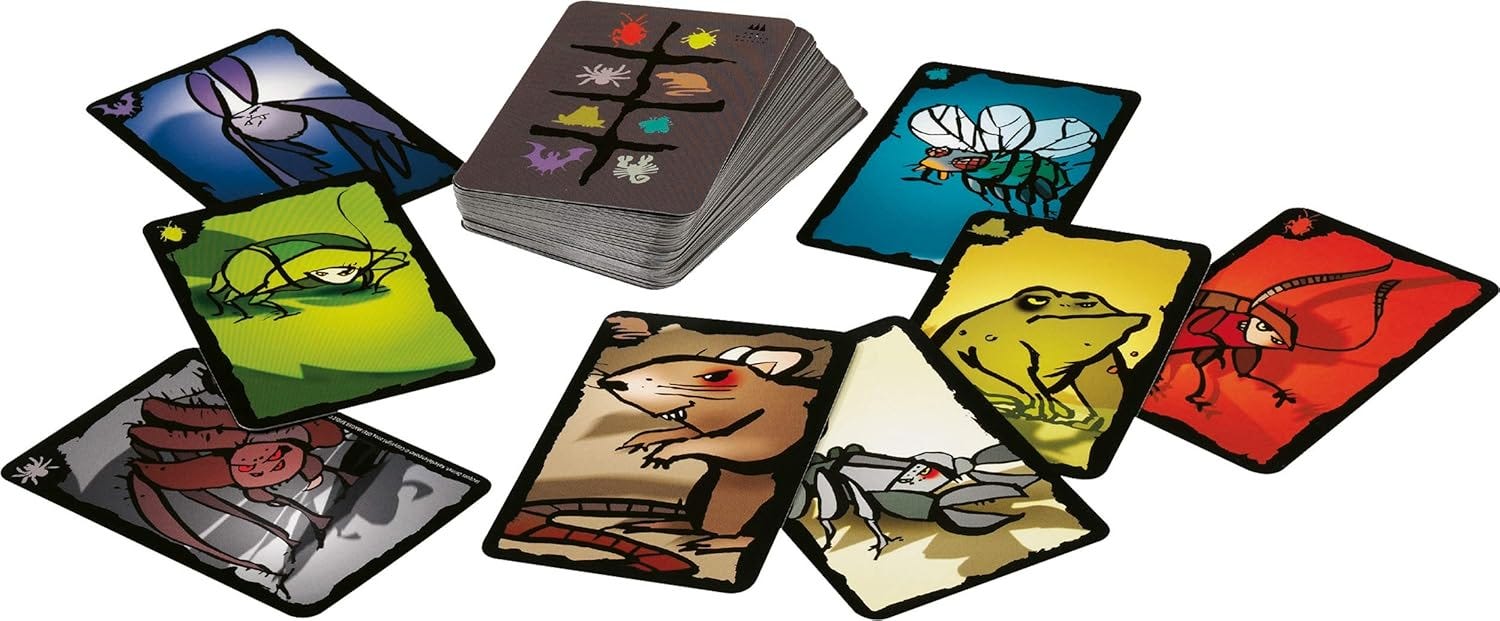
In Cockroach Poker, the deck has 8 suits represented by different animals. See the example below:
At the start of the game, the cards are shuffled and dealt as evenly as possible among players. A starting player is then chosen at random.
Player Turns
On your turn, choose an animal card from your hand and pass it facedown to another player, declaring its type. Your claim can be genuine or false. The player who received your card has two choices:
They can accept the card and challenge your claim.
The receiving player disputes your claim by saying “true” or “false” out loud. You then reveal the card you passed to them.
a) If their challenge is correct, as in they called your bluff, the card is placed face-up in front of you as a penalty.
b) If their challenge is incorrect, they place the card face-up in front of themselves as a penalty.
Example: John passes a card to Alice and says it’s a bat. Alice challenges John’s claim, saying it’s “false.” They flip John’s card over and reveal a scorpion! John’s bluff fails, so he places the scorpion face-up in front of himself.
Pass the card to another player
Instead of challenging your claim, the receiving player may peek at the card and pass it to another player who has not yet seen it. However, they must either repeat your claim or make a new one.
Example: John hands Ashley a “bat” card. Ashley is now the active player. She doesn’t want to risk guessing, so she peeks at it and passes it to Frank (who hasn’t seen it yet). Ashley must either repeat John’s original claim (a bat) or make a new one (any animal Ashley wants). After Ashley’s claim, Frank can challenge it like normal or peek and pass it along to someone else.
Note: You can only pass a card to a player who hasn’t peeked at it. If a player receives a card that everyone else has already seen, then they must challenge it. In fact, this tactic is often a core strategy.
Players repeat passing and guessing cards until someone incorrectly challenges and places the card in their play area as a penalty. The penalized player becomes the active player and starts the next round by picking a card from their hand and passing it to another player.
Game End
Play continues until a single player loses by starting a round with no cards in hand or collecting four cards of the same animal. As such, players are trying to eliminate one another by placing four cards of the same animal on each other’s personal pile.
Strategies
As you start to accumulate animal cards as penalties, your opponents at the table will try to play more cards of that animal onto you and vice versa.
A common strategy is to peek and pass an animal card around the table, making conflicting claims about its identity, hoping it reaches the right player who is both close to elimination and forced to challenge. If passing the card along the table is executed well, it creates a chaotic “broken telephone” effect that confuses and pressures the player who must challenge the card in the end.
Pros
The game features straightforward rules that are easy to learn and simple enough for gamers of all experience levels.
As rounds progress and players accumulate cards of the same animal, tension builds as multiple players come close to elimination.
As players pass animal cards around the table, tracking the claims made by every player will become increasingly difficult, making it harder to suss out what the card originally was.
Cons
One thing to be aware of in Cockroach Poker is that players often need to gang up on whoever is close to losing, which can feel a bit mean. However, in my experience, most players don’t take the game too seriously, as it’s a light, fast-paced game. If anything, players will want to reset and start all over again.

The Next Step
Note that these games are light, entry-level card games. That doesn’t mean they aren’t fun or less legitimate than other complex games. Simply put, they don’t provide a highly strategic experience like other complex board games. These games are meant for casual gamers who want to have a good time with minimal rules overhead.
If you’re looking for family games with striking visuals and a bit more meat on the bones, check out this article for game recommendations:
If you enjoyed this piece, consider becoming a free or paid subscriber to receive exclusive posts and support my work.